

The XRP Ledger (XRPL) has become the largest network for Ripple USD (RLUSD) for the first time since the stablecoin was introduced, marking a notable shift in Ripple’s blockchain strategy.
Subscribe to Stay Ahead of The News
Data shows that approximately $801 million worth of RLUSD is now held on the XRP Ledger, compared with about $795 million on Ethereum.

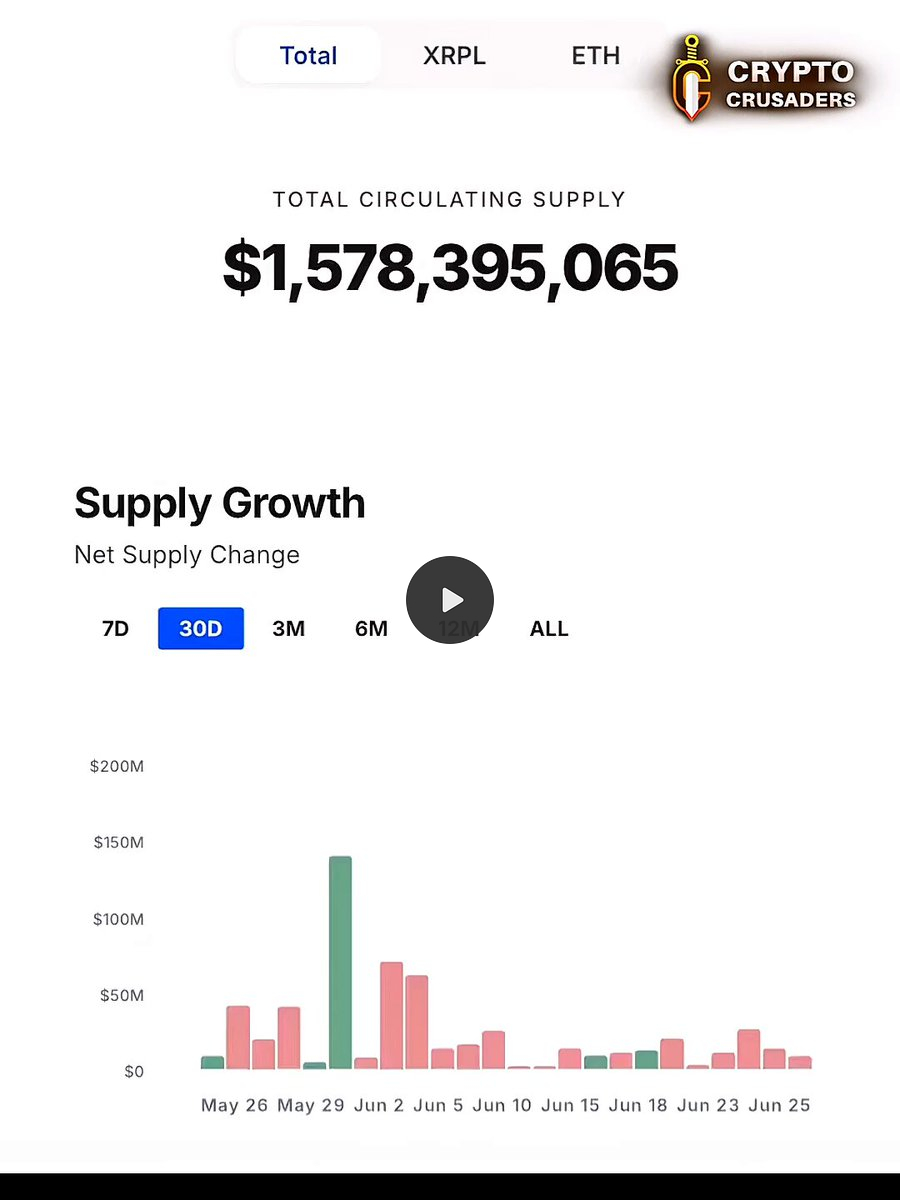
The change ends an 18-month period during which Ethereum hosted the larger share of Ripple’s regulated stablecoin.
XRP Ledger Overtakes Ethereum as RLUSD’s Largest Network
Since RLUSD launched in late 2024, Ethereum remained the dominant network for the stablecoin despite Ripple positioning XRPL as its primary settlement platform.
That changed after Ripple adjusted the balance of RLUSD across both blockchains over the past month.
During that period, Ripple removed roughly $539 million worth of RLUSD from circulation across Ethereum and the XRP Ledger.
Around 75% of those burns took place on Ethereum, significantly reducing the amount of RLUSD held on the network.
As a result, the XRP Ledger’s share of RLUSD steadily increased. Less than a year ago, XRPL accounted for only about 9% of RLUSD holdings. That figure has now grown to just over half, allowing the network to move ahead of Ethereum.
Institutional Activity Continues to Build on XRPL
The shift also comes as Ripple expands the XRP Ledger’s role in institutional finance through tokenised assets and cross-border settlement.
Earlier this year, JPMorgan, Mastercard, and Ondo Finance participated in a pilot transaction on the XRP Ledger involving the redemption of a tokenised US Treasury fund.
The transaction was completed in less than five seconds, a significant improvement over the one-to-three business days typically required through traditional banking infrastructure.
Institutional adoption has also accelerated in other areas, and the value of tokenised real-world assets on the XRP Ledger increased by approximately 124% in a single quarter, highlighting growing interest from financial institutions exploring blockchain-based settlement.
Ripple has also expanded RLUSD’s payment use cases, with Mastercard recently integrating both the XRP Ledger and RLUSD into infrastructure designed to support AI agents capable of making autonomous payments.
What the Shift Means for XRP
Hosting a larger share of RLUSD on the XRP Ledger creates more opportunities for XRP to be used within the network’s decentralised exchange.
Unlike Ethereum, where RLUSD functions as another dollar-backed token inside decentralised finance applications, the XRP Ledger can route transactions through XRP when direct trading pairs lack sufficient liquidity. In those cases, trades move from RLUSD into XRP before reaching another asset.
This process allows XRP to serve as a bridge asset for certain transactions occurring on the network.
However, XRP is not required for every trade. Institutions can establish direct RLUSD trading pairs when appropriate, eliminating the need for XRP in specific payment corridors.
One example is Ripple’s payment corridor with Bitso for transfers between the United States and Mexico, where RLUSD can be paired directly with a peso-backed stablecoin instead of routing through XRP.
As a result, the increased concentration of RLUSD on XRPL expands the number of situations where XRP can participate in transactions, but it does not guarantee that every payment or settlement will use the digital asset.
To Catch Every XRP Development as it Happens, Subscribe Now
&