
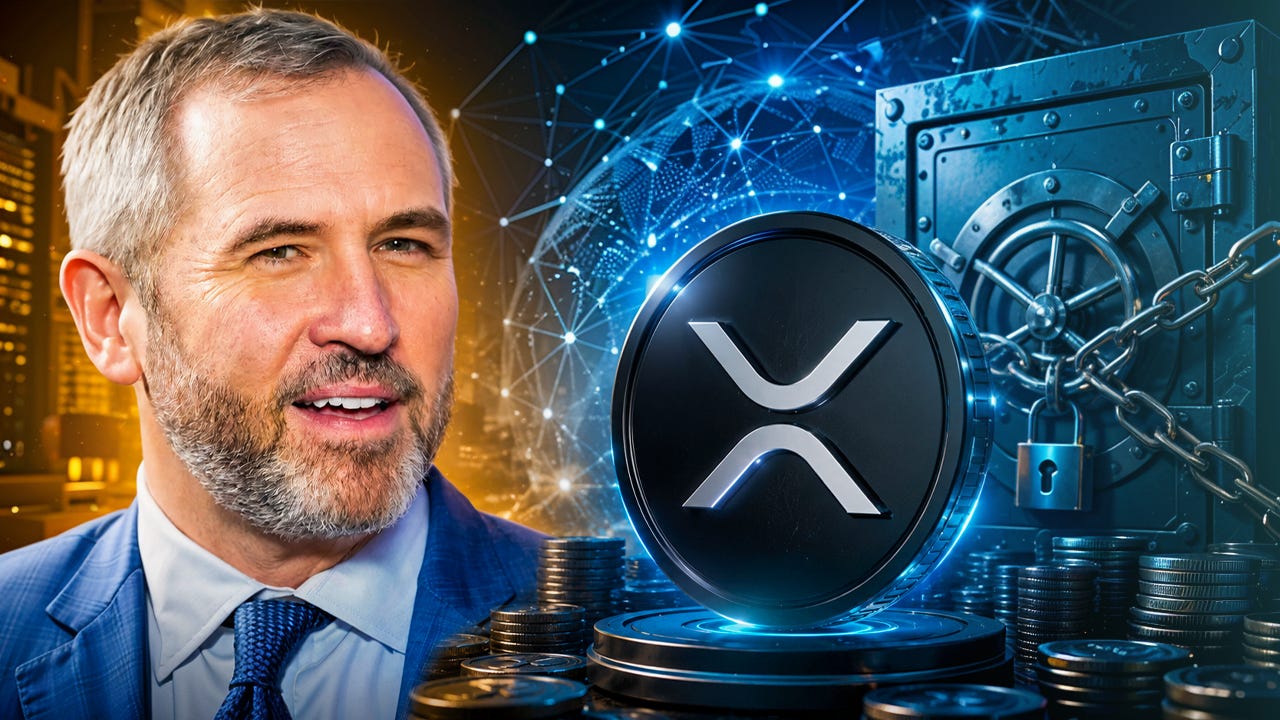
Ripple CEO Brad Garlinghouse has addressed one of the longest-running debates in the cryptocurrency industry, making it clear that Ripple’s large XRP holdings do not give the company control over the XRP Ledger.
His remarks come as discussions continue over Ripple’s role in the ecosystem and the distinction between the company and the digital asset it helped popularise.
Join Our Newsletter List to Receive Premium Market Analysis
Register Now and Get the Limited 50% Discount
Speaking in an interview at the KU School of Business, Garlinghouse said Ripple owns a significant amount of XRP, but stressed that ownership should not be mistaken for authority over the network.
According to him, the XRP Ledger operates independently through an open-source framework, meaning Ripple cannot dictate how the blockchain functions despite its sizable holdings.
Ripple Draws a Clear Line Between Ownership and Network Control
Speaking about Ripple’s relationship with XRP, Garlinghouse explained that the company has a strong interest in the asset’s long-term success because it holds a large amount of XRP.
However, he emphasised that this financial exposure does not translate into governance over the blockchain.
The XRP Ledger is maintained by a decentralised network of independent validators that process transactions and reach consensus without relying on Ripple for approval.
This structure differs from blockchain networks, where token ownership can provide direct influence over governance decisions through voting mechanisms.
Garlinghouse noted that while Ripple continues to develop products and services that utilise XRP, the company cannot unilaterally change the network’s rules or determine how transactions are validated.
Instead, updates and improvements to the XRP Ledger depend on agreement across its validator network.
His comments also reinforced the distinction between Ripple as a financial technology company and XRP as a digital asset that exists independently on an open-source blockchain.
Although Ripple remains one of the largest holders of XRP, the ledger continues to function regardless of the company’s involvement.
Ripple’s Business Remains Closely Linked to XRP
Garlinghouse acknowledged that Ripple’s success is closely tied to the growth of the XRP ecosystem.
As a result, the company has a clear incentive to support broader adoption, deeper liquidity, and increased utility for the digital asset.
Ripple has continued expanding its payment solutions, many of which leverage XRP as a bridge asset for cross-border transactions.
The company has also grown its presence in multiple regions by pursuing partnerships with financial institutions and payment providers looking to improve the speed and efficiency of international transfers.
Even so, Garlinghouse reiterated that Ripple’s commercial interests should not be confused with control over the XRP Ledger. The company’s ownership of XRP represents an investment in the ecosystem rather than a mechanism for directing how the blockchain operates.
He also pointed to the difference between the XRP Ledger and proof-of-stake networks, where token ownership can directly influence governance through validator selection or voting rights.
In contrast, XRP ownership alone does not grant Ripple the ability to control consensus on the XRP Ledger.
The clarification adds another layer to the ongoing conversation surrounding Ripple and XRP, particularly as the company continues expanding its global business while the XRP Ledger evolves through its independent validator community.
Subscribe To Our Primeum Newsletter
Don’t Miss the 50% Offer, Register Now